
Selected productization cases
A few examples of how we turned fragile internal tools into solid products. Details are anonymized, but the patterns are real.
Want to subscribe for more case studies?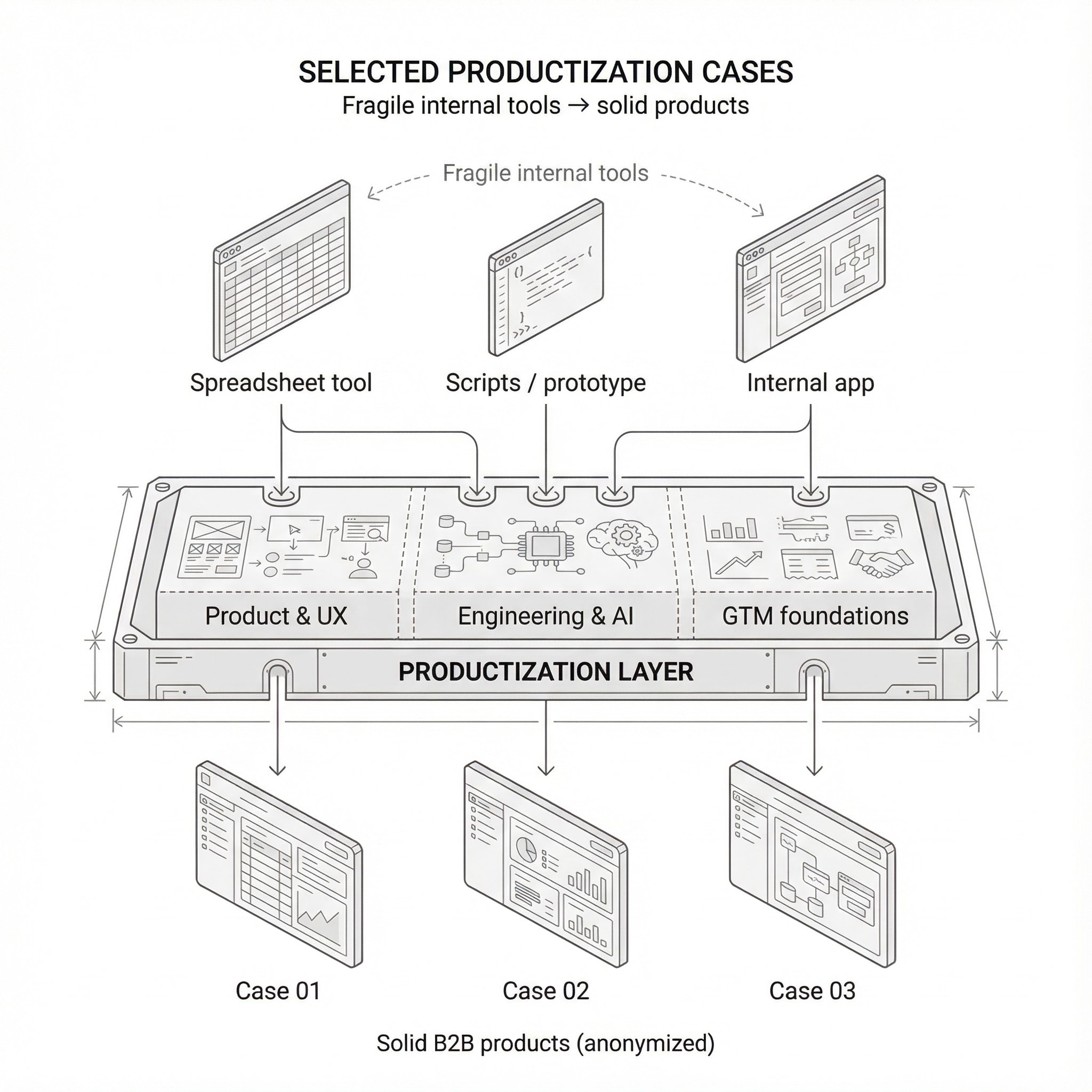
Real products start with real problems
Here are a few anonymized cases where clients hit a brick wall with their internal tools and we helped turn those constraints into scalable, product‑grade solutions.
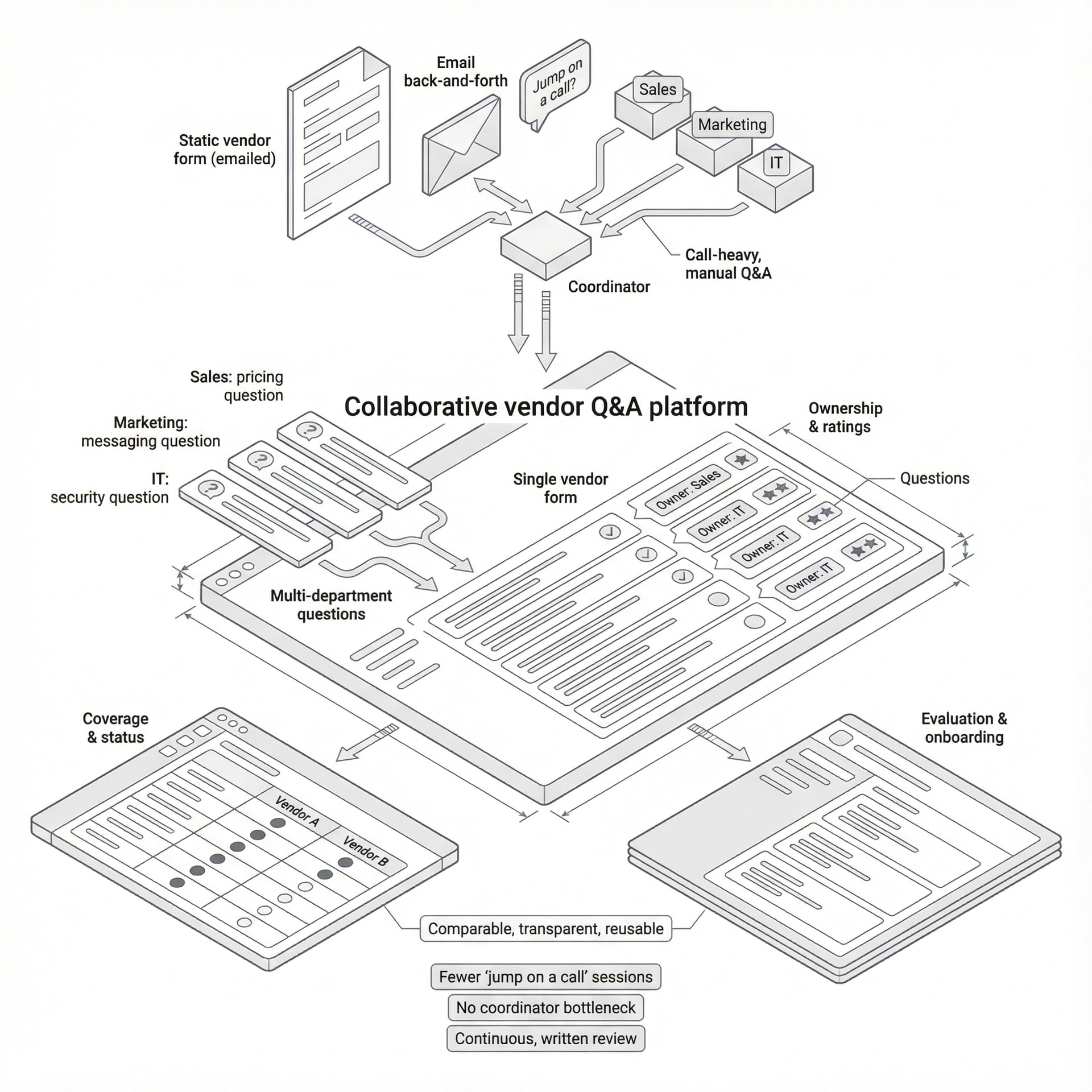
Case: Vendors Q&A
A procurement firm needed to tame chaotic, call-heavy vendor evaluations. We built a collaborative Q&A and evaluation platform that keeps everything written, comparable, and transparent across departments and vendors.
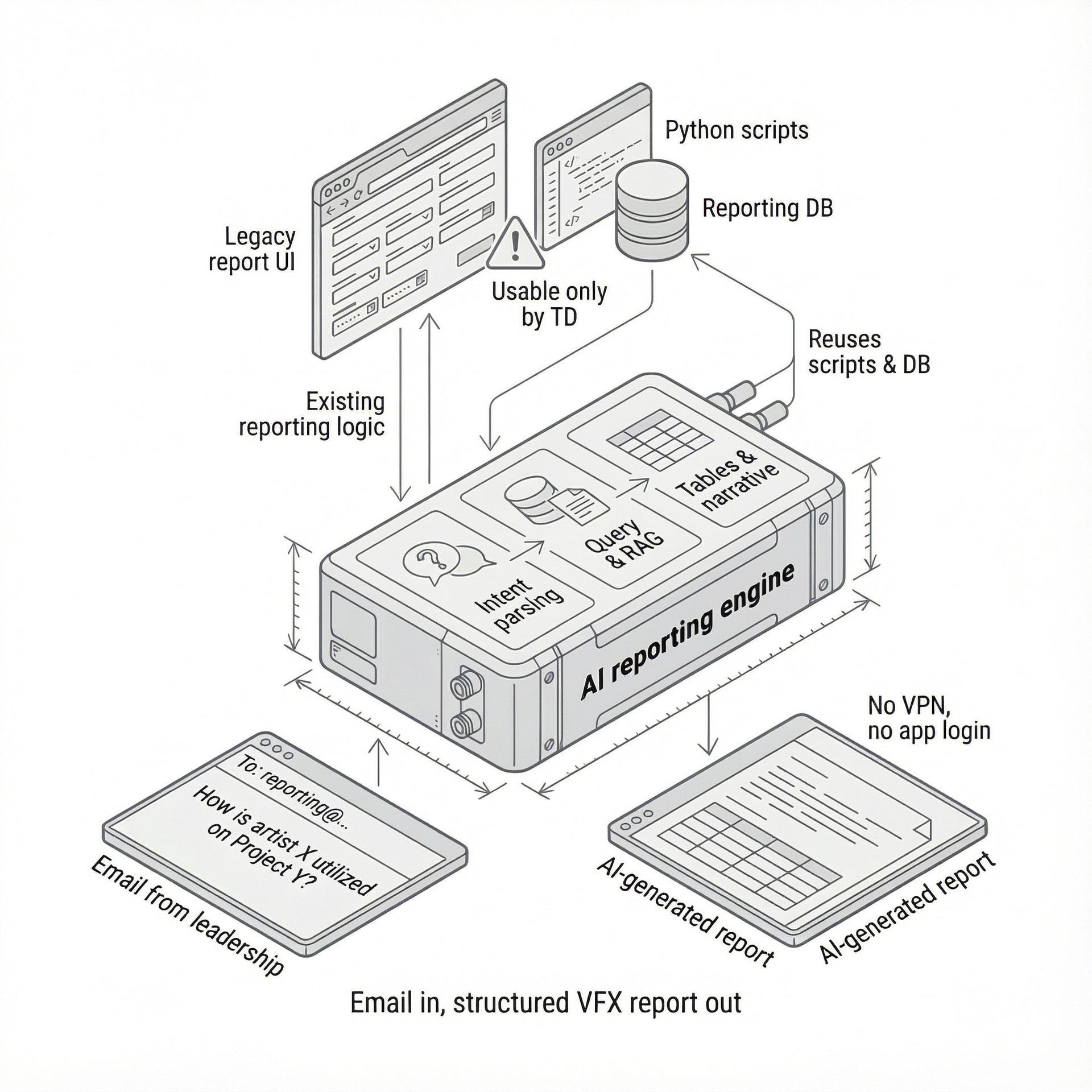
Email-native reporting for VFX leadership
A global VFX and animation studio relied on a fragile internal reporting tool for mission-critical production and resourcing decisions. We turned leadership's natural email workflows into a robust, AI-powered reporting interface.
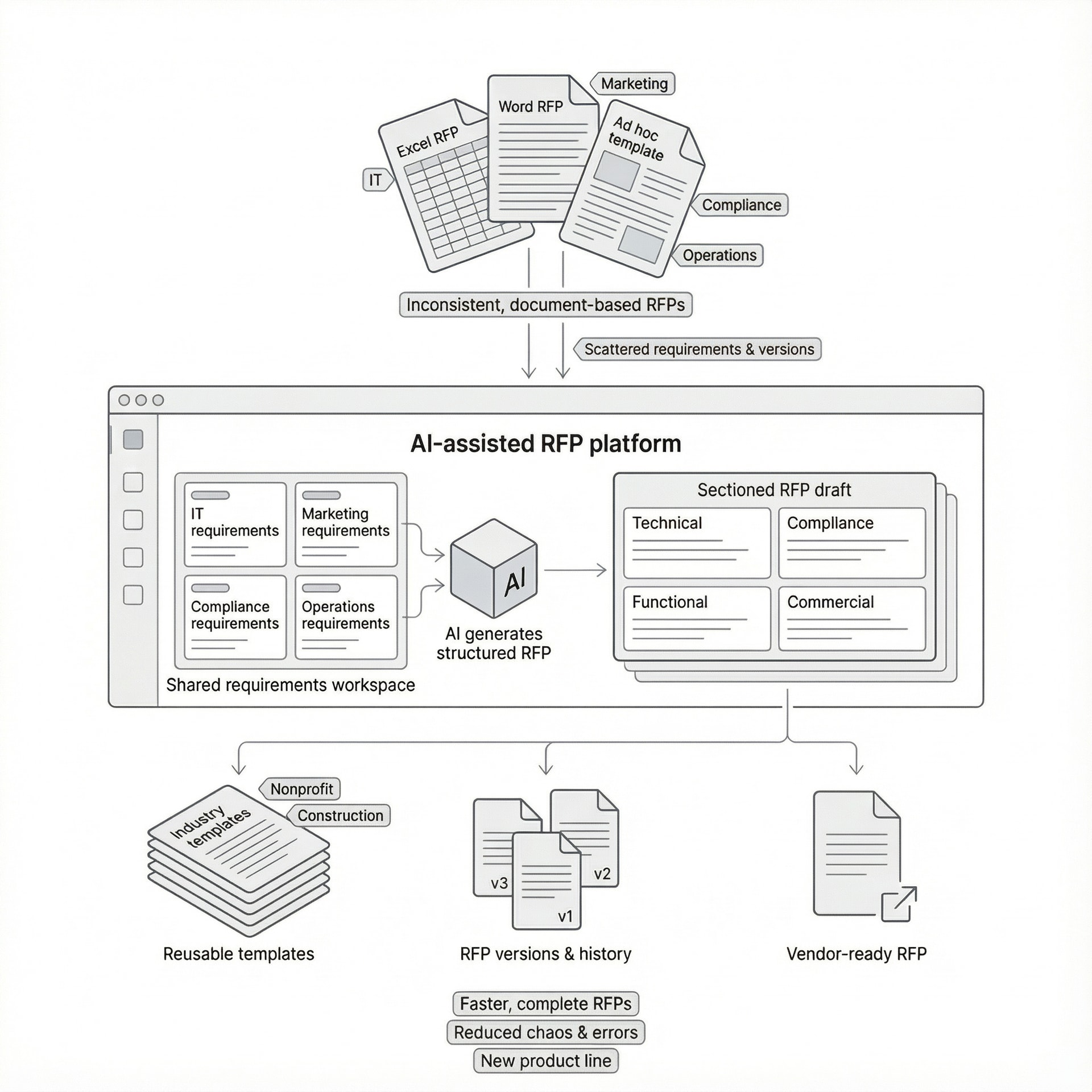
AI-assisted RFP creation and collaboration platform
A software vendor selling into enterprise RFPs wanted to turn chaotic, document-based requirements into a structured, AI-assisted RFP creation product they could use internally and sell to customers.
We use a tight stack that balances speed, robustness, and long‑term maintainability.









Everything You Need to Know
Do we need a fully working tool before we talk?
No. It is enough to have a real internal asset: a heavy spreadsheet, prototype app, script bundle, or R&D tool that people rely on.
What if we only want an internal upgrade, not a product to sell?
That is fine. Many clients start with “make this safe, usable, and maintainable internally.” Productization for external customers can be a later step.
How long does the process take?
Typical ranges: Phase 0 is 4–6 weeks, and Phases 1–3 together usually take about 3–6 months, depending on complexity, integrations, and scope.
How much of our team’s time will this require?
We need access to 1–3 domain experts and a technical contact. Time is heaviest in Phase 0–1 for interviews and reviews, then drops to periodic check‑ins.
Who owns the IP when the project is done?
You do. All code, designs, and documentation specific to your product are yours. We only retain generic, reusable internal tooling and know‑how.
Can you work with our existing tech stack and team?
Yes. Our preferred stack is Django, Next.js, PostgreSQL, Redis, and AWS/GCP, but we can integrate with existing systems and coordinate with your internal engineers.
Is AI mandatory in every project?
No. We only add AI (Gemini, OpenAI, etc.) where it clearly reduces expert effort or user friction. If your data and processes are not ready, we will not force it.
How do we get started?
We start with a short call, and if there is a fit, a fixed‑fee Productization Assessment. You get a clear blueprint and options before committing to a full build.